|
||||
|---|---|---|---|---|
|
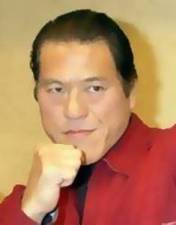
Antonio Inoki
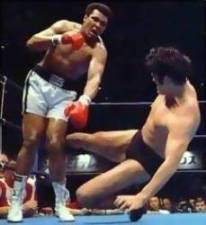
Birthdate: February 20th, 1943 Championship History: IWGP Heavyweight Championship: WWF Heavyweight Championship: WWF Martial Arts World Heavyweight Championship (Held 2 Times): All Asia Tag Team Championship with Michiaki Yoshimura (Held 3 Times): All Asia Tag Team Championship with Kintaro Ohki: NWA International Tag Team Championship with Giant Baba (Held 4 Times): NWF Heavyweight Championship: UWA World Heavyweight Championship: Biggest Matches: Pictures: Featured Signature Moves: Other Signature Moves: Career History: One of the most important and influential figures in wrestling history, Antonio Inoki single handedly changed the wrestling landscape during his career. Even prior to creating New Japan, Inoki was considered one of the brightest young stars in Japan. Trained by the great Rikidozan, Inoki and Giant Baba were expected to lead puroresu to new heights. Already accomplished in the tag division, Inoki and Baba would split in 1972 to form two wrestling promotions: New Japan and All Japan. Almost immediately the two promotions began seeing success, as New Japan attracted many of the most talented American wrestlers to come to Japan to wrestle. From 1972 to 1998, Inoki would not only play an important role behind the scenes but also be one of the best wrestlers in the ring. March 6th, 1972 - the beginning of a new era. On this date the first New Japan card was held in front of 5,000 people, with Inoki main eventing against American great Karl Gotch. Even though Inoki would lose the match, over the next four years he would find success as a four time holder of the NWF Heavyweight Championship (New Japan's top belt). Defeating wrestlers ranging from Jesse Ventura to Masa Saito to the great Lou Thesz, Inoki led New Japan from a new promotion to a global powerhouse in only a few short years. In order to increase the promotion's exposure, in 1976 Inoki had a match against boxing great Muhammad Ali. Even though the match was universally panned as boring and uneventful for 15 rounds (which it was, since Inoki refused to get off the mat), it helped New Japan gain international exposure. Inoki next went after the WWWF Champion, Bob Backlund. After drawing with Backlund in the summer of 1978 (with each wrestler having one fall when time expired), Inoki would finally win the belt on November 30th, 1979. They would have a rematch a few weeks later, which Backlund would win due to interference. The commissioner at the time said that Inoki still deserved the belt, but Inoki refused it. This led to Backlund facing Duncum Jr. for the belt back in America, and the title switch went unrecognized by the WWF. Still though, it was one of many highlights that Inoki would have in his career. In 1981, Inoki would disband the NWF Heavyweight Championship in favor of the IWGP League. Each May/June from 1983 to 1987, a tournament was held to crown the winner of the IWGP League. After losing to Hogan the first year (in controversial fashion), Inoki would win the League in 1984, 1986, and 1987. After his win in 1987 it was decided that Inoki would become the first ever IWGP Heavyweight Champion. Besides his successes in the IWGP League, Inoki also accomplished the impossible during this time period - in June 1986 he defeated Andre the Giant by a submission. This would be the only time in his career that Andre the Giant would lose by submission and one of the few times that he was defeated period prior to his late WWF run. By the early 90s, Inoki was getting older and decided that it was best for the business if he only wrestled on special occasions. In 1992, he announced that he would have a special eight match retirement countdown that would span until 1998. For his first match in 1994, he defeated The Great Muta with the sleeperhold. After his 4th match (defeating Yoshiaki Fujiwara) in 1995, Inoki made a special match with Ric Flair to take place in North Korea. Inoki would win the match, solidifying himself as one of the top wrestlers in the world. At the Tokyo Dome Show in 1996, Inoki would face Vader in his 5th of eight "official" retirement matches. Even though Vader brutalized Inoki, Inoki still managed to come out with the victory. In 1997 for his 7th retirement match, Inoki faced off in a classic encounter with the original Tiger Mask, Satoru Sayama. Again, Inoki would come up victorious. Finally, in 1998 Inoki would win his last match, defeating Don Frye with the ground abdominal stretch in less then five minutes. The in-ring career of the great Antonio Inoki was officially over. Even though Inoki was done in the ring, he still felt he had a lot to accomplish out of it. Noting the increase in popularity of MMA and shoot fighting, Inoki attempted to incorporate MMA into New Japan. While opinions vary on the success of this idea, it was another example of Inoki always trying to stay one step ahead for his company. One of the greatest wrestlers to ever grace the squared circle, Inoki will always be remembered for his contributions to Japanese wrestling. |
||||
|